AFTER THEY ARE GONE

AFTER THEY ARE GONE

I felt my Mom beside me today. There she was…her presence, love and support right beside me as I walked down the gangway to board my plane. She died 16 years ago and yet there she was. Sudden tears, hot with longing and gratitude, puddled in my eyes. I don’t know what those moments are…visitations? The continuing journey of grief? Both? I’ll try to unpack this to get to the source or cause…here goes…. 

Last night I got to do a concert in NY with my most favourite musicians in the world. Top drawer and well over a decade’s worth of making music together…not nearly often enough but a privilege for me every time we are together.  So, there’s music…the spiritual discipline of it, the beauty, the literal and metaphoric harmony. The physicality, the vibrations. Also, as it was a new show, the pressure and focus of it…the aspiration that it will work, that I won’t fuck up and that the lyrics I inadvertently make up when I do fuck up, make sense. The joyful process and exertion of prepping for a show is also a kind of hurdle. Mom liked to say, “When the hurdles come, keep hurdling.”  Words to live by and boy, did she. All to say…for atleast two days leading up to a gig like that I’m living in an altered state…half in the world, half in rehearsal. The sensation is what I imagine it would feel like to be stuffed into a canon.  The launch of this new show went well last night I’m thrilled to report and the ensuing wash of relief and gratitude moved me to another kind of altered state…of breathing again. Early out this morning on 4 hours sleep…so exhaustion perhaps lets one’s guard down whilst in that state of re-entering “normal” life.

Walking down the gangway, suspended mid air between last night and the day ahead, I felt her. I felt the seeds of art she had taught me when she would move back the living room furniture, crank up the stereo and we would dance together, spinning in delight, my beautiful Mother and five year old me.   When she had set up a rehearsal space for me again in the living room before I was to sing at ten years old at the Tokyo American Club. It mattered. The message from her to me was that I mattered. I felt that all the calls she had made to make it possible for me to have childhood opportunities to perform serially under the auspices of a professional theatrical company, Toho, in Tokyo where I was raised…calls and effort that had created an apprenticeship throughout my childhood that in turn had led to the my being able to hurdle without falling last night.  I wanted and want to tell her, to thank her, to let her know that now at 70 I am reaping the benefits of her gifts as a Mother, my mother.  Did I conjure her? Was she there hearing me? I pray so.

Two other times of late, I’ve had a moment.  She is gone now but years ago my long-term pal Heather and I had for over a decade shared a dream to again live in NY and, eventually, for a few years we did. Sometimes together and then in our own flats. It was heaven. We had big girl playdates galore in the city…taking in plays, exhibits and concerts, walking through the fairyland of snow blizzards down the middle of Fifth Avenue, staying up late, sharing friends and life overlaps. It was rich and meaningful and its own special miracle. As I came out of my NYC hotel last week a blast of air whooshed by me and suddenly it was as if Heather was on my arm again, walking the way we would together.  Tangible joy.  She had a cluster of very close friends and each has reported over the years similar “Heather moments”. Does she fly by or is it just that our love for her, cut short by an early death ran so deep that it continues to find ways to express itself?

This last…well, you decide. My partner Patrick and I had the distinct privilege of having been introduced to the remarkable Irish scholar, Manchan Magan. He was an angel on the earth who led a unique life… travelled the world as a seeker living variously in Himalayan huts, with cave dwellers in Thailand, with a plethora of native tribes throughout the Americas…always finding connections in language back to his native Gaelic. His ideas were vibrant and overflowing with joy. He recounted tales at some point of being so happy at age three to sit in his familial garden, talking to the grass in kinship…rejoicing that he too was sustained by a harmonious source. Tragically this magical, Gaelic scholar…suffered a horrid and aggressive cancer and died, with so much more to give, at 55. Damn. A few days before he passed, he kindly wrote thanking me for being a “supporter and guardian.” That word “guardian” lingered in my mind and I wondered what it meant? What was the task he had set me to? 

Ten days after he died, I bolted awake at 4am with Manchan prominently in mind.  “Why?”, I wondered but then his word “Guardian” fueled a desire to pray for him. And so I did, for his continued journey and purpose…along those lines, to the best of my ability.  After a while, things calmed and some funny sounding words came to me …Gaelic, I presumed. Feeling I would not remember them come morning, I asked Chat GPT what they or words sounding like them, meant in Gaelic?  The response was, “May you be well. Goodbye, little one.” Then the voice continued in English…”Live in the Knowing. I am living in the Knowing.” 

Whose to say? All I know is that these moments organically fold into a continuum of memories.  If indeed these are visitations, I pray that once I’m on the other side, my soul can visit and impart some comforting presence just as I have been, imagined or otherwise, companioned by people I have known and loved and will always love. Wouldn’t that be fun! Atleast I promise I’ll try.

A War Un-won?

In 1993, I had the chance to visit Vietnam. I’d been doing a film in Thailand and with a few days off decided to head north heeding the advice of an experienced traveller to Hanoi “Before,” she said, “it was ruined.”

A quick hop and there I was, in Hanoi, a place for which I had plenty of references but in which I had no tangible experience.  I had after all lived through the Vietnam War. Sat bedside in Tokyo army hospital burn wards in my teens along with my class mates writing letters for bandaged soldiers barely older than we were.  My cousin had served two tours in ‘Nam, our local paper the Tokyo Stars and Stripes kept us abreast of the horrors, the Foreign Correspondents Club at which my folks were members was always full of seasoned, hard drinking journalists fresh off the fields. I had heard stories of the Hanoi Hilton, attended a talk given by Jane Fonda on the heels of her trip to Hanoi. Shell shocked soldiers on R&R often stayed in our home from 1967 to 1972.

Hanoi was nothing like what I had imagined…and nothing like it is today. 1995…streets were bustling with yaks, bicycles and the occasional car weaving through each other indiscriminately. Street vendors flourished, I stayed in the most posh accommodation of the time..a Soviet built hotel that had wax toilet paper. I remember feeling as if I was on two trips at the same time. One…to an exquisite new country filled with hard working farmers in a moment of great transition. The other, to the country that had been our enemy and to which too many young Americans had been sent never to return. In the sweltering heat, dressed as I was in flip flops and a sun dress, sweating profusely, I tried to imagine what the experience could have been for a young man from say Nebraska who had never been out of his own county and now half way around the world from everything he had ever known, stepping off his first plane ride, weighted down with gear, risking all to battle the ‘spread of communism’ whatever that meant.  Then after all that…to have lost the war. Waste upon tragedy upon lunacy.

On the heels of that mind bending trip, I was introduced to a Thai businessman, Stanford grad, man of the world who laughed at my depressed reaction to Hanoi. “Oh you Americans!” he laughed. “You always think you lost the Vietnam War. You didn’t! You won!”  A pretty astonishing declaration. His reasoning was that prior to the war, the Sino-Soviet pact was rock solid and eyeing India as a further frontier for business expansion. America, terrified to loose the wild west of opportunity, set about to break the pact…and that successfully done, exited Vietnam. History has gone on to prove my Thai friend right in the sense that in spite of the US having “lost the war”, Vietnam is anything but communist and a now a hot bed of commercial opportunities and growth for western entrepreneurs among others.   

I read in the news today that Putin is hosting Modi, Xi and Erdogan. Kim Jong-un is expected to attend as well, each with a posse of businessmen. Putin is looking to “consolidate solidarity” and build a “new type of international relation and business community away from an unreliable and punitive America.”

So…having “won” the Vietnam War 50 years ago it is possible that it will be un-won over these next few years.  China and Russia are united in looking to solve India’s recent tariff wound at the hands of the person occupying the White House. Looking to create partnerships in commerce and invention.  We are already collectively 80% behind China’s alternative energy industry. Reading of this extraordinary gathering I shudder to think where else we will soon be lagging.

Virginia Calling

My dog got hit by a car a few years back. She survived, mercifully with only a broken leg to show for the misadventure but it meant that rather than fly home to Colorado from the east coast, we would need to drive. I had the time, it was summer…so, off we set. Our route took us through the stunning, ancient hills of Virginia and West Virginia, land of my matriarchal ancestors. Looking at those vistas, I remember some internal switch being involuntarily flipped that cued a calling to return to those roots. Who knows why? Over the course of my life, I had only been in those parts for a handful of scattered weeks but then again, I had grown up under my Mother’s roof and for as much as her life had evolved beyond West Virginia, there was a part of her that always remained deeply grounded in those sensibilities. She could as easily wear an haute couture, gold lamé gown dripping in jewels as she could smack the shit out of an errant rattler in the backyard with the flat side of a shovel.

Recently, when an offer came in to do a movie in Virginia, I jumped at the chance to return. So here I have been this last summer week, in these unfamiliar, familiar parts. As that flipped switch had harbingered, I have been having some kind of serious series of woo woo moments since arriving.  For one thing, the vegetation is much of what Mom had duplicated in my sister’s and my Tokyo childhood gardens …gardenias, camellias, lilacs, azaleas…all of which are in bloom now.  Childhood aromas abound.  The decor in the house the film company has me staying in, as well as the residence in which we’ve been filming, eerily repeat choices of Mom’s/my guess is my grandmother Mamaw’s, as well.  Silver trays, tassels on knobs, worn tapestry carpets, silver candle sticks, sea shell and drift wood collections, wicker backed chairs, etched glass bowls, cut crystal vases, arrangements of dried pussy willow stems and peacock feathers. Shades variously of blue gray, taupes and muted coral on the walls and linen, lots of monogrammed linen. These are each elements of décor I have adopted into my own homes but had heretofore never particularly identified them as hand me down influences from my matriarchs.  Then…oddly…there are Asian accents as well. Massive peony patterned porcelain jars. Blue and white rice jars. The Asia connection continues as my driver, in this teeny tiny Virginia hamlet is of all things, Japanese.  So random…then again not? The Spirits are working some kind of wicked pull to my past and to my ancestors and I’d be lying to say I am not a little comforted by it all.  Speaks somehow to the quantum interconnectedness between past present and future… All as being one.

Inevitably somewhere in the day this reverie gets interrupted by yet another punch from the news.  You know, those government, blow up punches. The eradication and/or defunding of the EPA, Department of Education, NIH, PBS, NPR, vaccine and cancer research, USAID, etc… Tragically, the list goes on. My sense of identity as an American, cracks anew. I mean what does it mean to be an American anymore? We certainly do not stand today for any of the values my generation was raised to emulate. The path ahead as citizen again becomes fraught, unstable. Thus frozen but in the newfound comfort of Virginia, I turn willingly, to the past. As if to reassure myself that because I, we, have a past we indeed do have a future.

In an attempt to re-root in the vanishing America I love, I’ve taken to wading through the Constitution and have found solace.  It spells out clear directives and duties of each branch of government, displays evolving humanity, compassion, lawful procedure, separation of powers, separation of church and state. Thus re-rooted, when yet another flagrant action of total disregard for our Constitution is perpetrated, it is easier to undo my ingrained trust of government, call out the wrong, reset the trajectory if only mentally and realign with my, with our ancestors’ wisdom. I breathe in the Virginia aromas anew and listen for life cues. Whilst I wait…I imagine I feel or perhaps even feel an embrace from the past encouraging me and all of us onwards.  

BUDAPEST

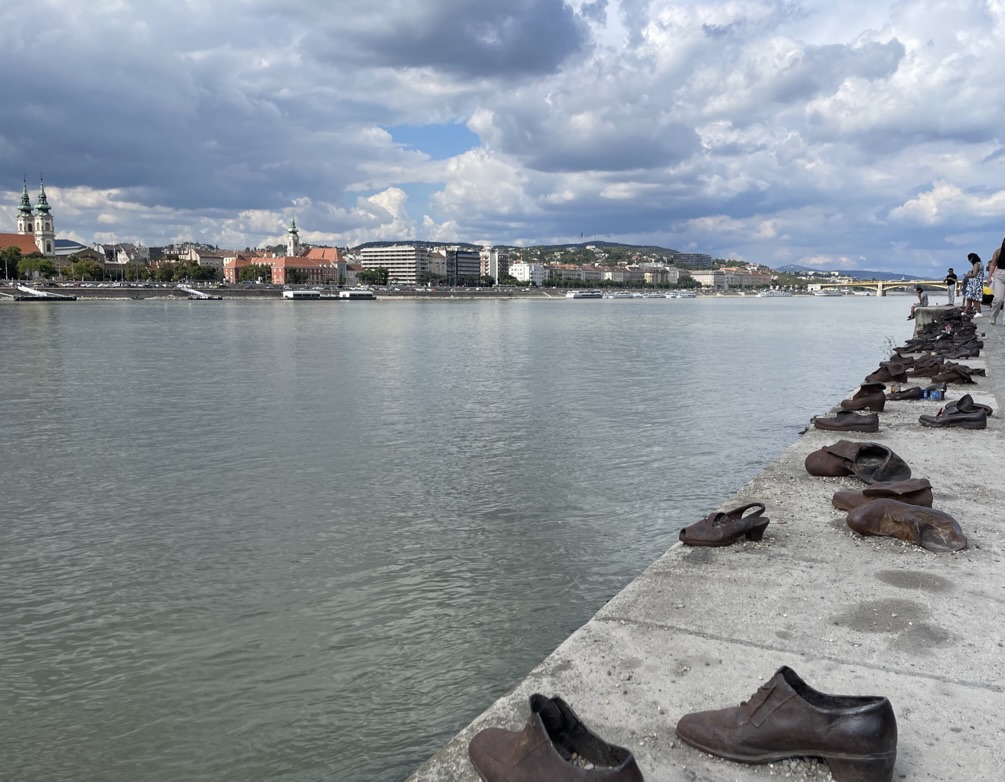
Neither of us had ever been, so given the opportunity to go the Budapest, we jumped at it.  Autumn, the perfect time…a new country, a capitol of renown in our sites and off we went.  It did not disappoint. Stunning, a mini Paris of sorts architecturally, impressive restorations in full swing, sparkly clean, kindness in the culture, each walk was more beautiful than the last, fabulous restaurants, inviting cafes, landscaped parks, efficient and negotiable public transit…it was easy to feel welcomed.  Those were our first and, in many ways, lasting impressions.  Like most places though, there was also an undercurrent and even if we could not articulate it, we could feel it.  I think the first place I became aware of the flip side was at the edge of the graceful Danube whilst standing by the shoes art installation which commemorates the last act of Jews who had been forced into the river by Nazis. Had the unwillingly barefooted owners of those shoes been quaking in their last moments? Had they caught the eye of a Nazi hoping for some trace of humanity before being unceremoniously shot or merely forced into the river? To what god had they cried? How many generations of possibilities and hearts shattered in the terror?  Standing on the flats of the Pest banks as we did, you could look up toward the hills of the Buda side that supported magnificent churches and statues reaching aspirationally, toward the sky. None of that beauty had mattered. Evil won that day. Those days. Those years. Indeed those decades, well beyond WWII. 

We were told that we had to visit the House of Terrors Museum…from the outside, a charming city villa in the center of town. The interior told a very different story…chilling, gruesome.  The building had been one of the places the Nazis had perpetrated unspeakable crimes during their occupation of Hungary and at the end of WWII, the Soviets carried on the Nazis’ brutal traditions. This edifice had been a center through which hundreds of thousands of Hungarians had been exiled to gulags in Siberia. (The last Hungarian prisoner had been returned to Hungary in 2000.) Teenagers had been executed there, people unspeakably tortured. The three storied building did level best to present the facts and in so doing bore witness to humanity at its most monstrous. It was a virtual, visual journey into an unimaginable hell and it shook us at the core. It also served as a vivid cautionary tale.

We had a happy reunion with a friend from Budapest, a former and very brilliant theatre colleague. I’ll call him Andras. Our time with him was short, so after dispensing with the necessary surface life catch up, we dove in.  Andras and Orban had been university mates decades ago…Orban, Andras said, was brilliant then but that power had got ahold of his inner life and off the rails he’d gone. Further he said that Orban has been “Undoing democracy, democratically.” That was chilling. Over the course of the Prime Minister’s reign, gay themed books have been banned, there is an ongoing government campaign of historical revisionism designed to look favorably on Russia, branches of government have been undermined and thus slowly killed off, there has been a systematic installation of conservative judges, ongoing climate change denial, media o’er taken, experimental arts defunded. Orban, a glacial nightmare. US beware.

Andras had alerted us to a student demonstration that was to take place that early evening. We felt duty bound somehow to go. It was to start at one of the main bridges with plans to march to Parliament Square.  As we waited in the square we could hear the chanting crowd approach. Riot police were out in number, geared and waiting. We spotted cameras on tripods on the Parliament steps aimed at the empty square waiting to capture images of whoever turned up apparently.  They seemed more a warning than truly ominous

As the chanting drew nigh, we could see the first wave…it was fun. Party like, festive and thank heavens, peaceful. We noted as the demonstrators started to grow in number in the square, that they were a multi-generational population, made up presumably of students and admin. The look in their eyes ranged from hopeful to despairing. Maybe it was seeing the intentionality in their eyes, the purpose in their steps but I suddenly found myself in tears in the midst of it all…a visceral reminder that it can happen, it, the unthinkable, has happened here. Like traveling into a possible future, one to which we are headed, if we do not continue to do what we can. When we told Andras of the similarities in the US to tectonic plates shifts he had described, he was stunned. Said they here as democrats and rational conservatives alike, whilst certainly aware of Trump and his direct correlation to Orban, had not realized things had gone so far in the US. That they look to America as the hope… and surely it would prevail.  We told him we remained hopeful but were not sure, not sure at all.  

So as not to close out focused entirely on devolution of democracy as we have known it, let me say that toward the end of the gut wrenching displays at the House of Terrors, was an account of the Hungarian Uprising of October 1955. A day when there was a nationwide revolt against the Soviets.  How had that been possible? They’d had no internet, there were eyes everywhere, terror reigned and yet…all the better virtues came together to laugh in the face of evil that day. Where had the fuel for hope come from? The citizens of that revolt had no means, dire consequences were the promise, evil seemed omnipresent and yet hope and freedom and courage, solidarity, promise, love, intelligence, life, human rights…all of that burst through. That hard won victory did not really come until 1990 but it had been a tipping point in consciousness and one that however eventually, had won the day. I hope it wins ours as well.

Reunions and the Lantern

My high school classmates and I are fast approaching a reunion. I’m looking forward to it, to reconnecting, swapping life stories, sharing pictures from then and now.  Predictably, many of us knew each other through chunks of our formative years. We spoke of aspirational dreams through our blooming hormones and formed many of our values with, on and through each other. We shared our innocence before the world moved us into its harsher realities. A crew on the reunion committee asked that we each pull together some remembrances in order to share them. I’ve read the submissions thus far and oh my, the floods of memories they have stirred.  Here is some of what came up in those waters for me. 

My dad’s career as an engineer with Union Carbide moved my family to Tokyo from Greenwich Ct., in 1960. Carbide had just initiated a joint venture with Nippon Unicar, so off we went.  My folks, Ray and Marshie, were thrilled to return…they’d been there under General MacArthur during the occupation days, with part of that rebuilding effort. Dad, had partnered with the brilliant Seymour Janow, travelling the length and breadth of Japan, assessing and where possible turning munitions factories back into fertilizer plants for a starving nation. Mother, partnering with dear pal Mrs. Connor and under the directive of Mrs. MacArthur, launched their school, Western Customs and Manners, open to all wives of Japanese military officers.  

We lived for the first many years in a rambling, quasi Western, great old house rented by Carbide. There were expansive gardens, well tended to by the property’s long-term gardener. He was of an age that meant he had survived WWII in Tokyo which meant in turn that the emotional wounds inflicted by that war must still have been in the healing process. Mom was West Virginia born and some healthy percentage of her joy came from keeping her hands in the dirt, digging, planting, watching things grow. This meant that, however reluctantly, the gardener had to deal with this American, this force who was my Mother, in “his” garden. He was cordial but remained distant and about his work.

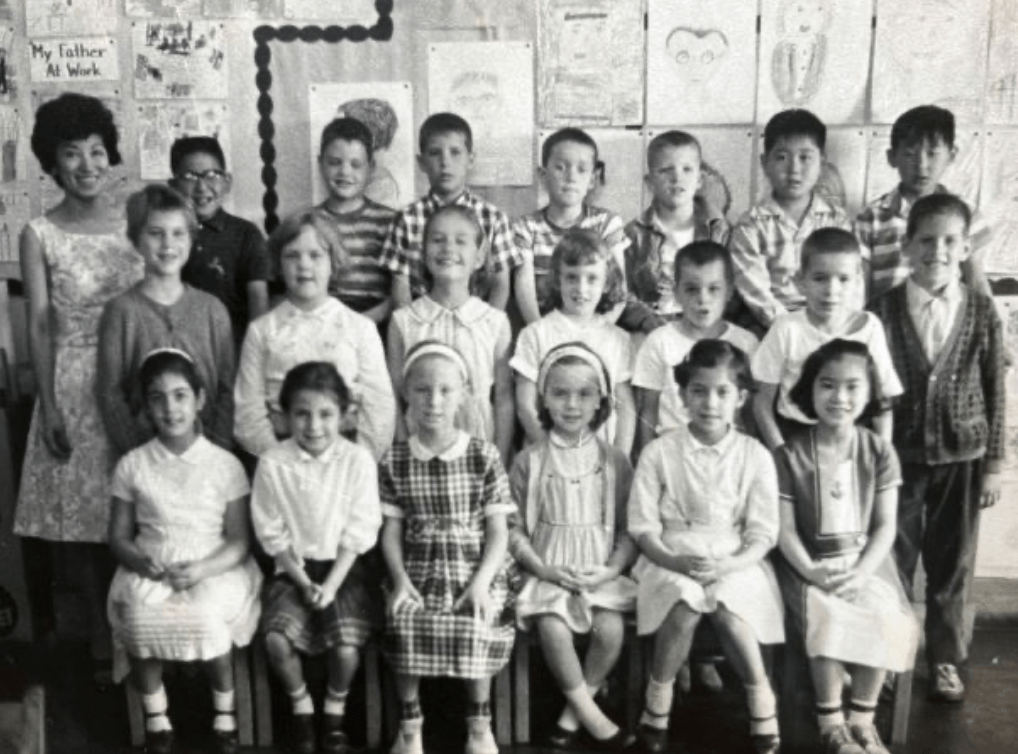
My sister Mara and I rode bikes throughout the neighborhood from as young an age as I can recall with total freedom. Oh sure, the kids our age on the streets would point, laugh and call us “gaijin” (literally translates as barbarian) but the taunts were more in astonishment to our novelty than malice and we peddled on, carefree. We were regulars at the candy shop, wanted to be just like the beautiful butcher’s wife Yaeko-san when we grew up and had little girl crushes on the handsome tofu shop owner. This was our world and we were happy in it.  Long term US Cultural Attaché, Walter Nichols soon became a key figure in our lives. He was instrumental in bringing to Japan a host of American artists, many of whom, happily for us, ended up staying in our home, some for extended periods of time.  Henry Mancini, Tennessee Williams, Harold Clurman to list but a starry few. Mara and I took these extraordinary experiences for granted.  Now we know how incredibly privileged we were and are unspeakably grateful for it all. Vivid memories from ASIJ (American School in Japan and later from Sacred Heart) linger…Mrs. Sato in first grade, Miss Kochi in 2nd, Mrs. Story in 6th, Dr. Cleveland who ran the swimming team.  To this day I put both hands on the edge of the pool at the end of a frog lap lest I, again, incur his wrath.  Saturdays were spent at the American Club. Ever smiling Ken-san at the front desk would check us in. Ballet or bowling class…pizza and root beer followed by the matinee movie. I’m still traumatized from the day at age 6 I realized, after swimming and whilst changing into my sundress, that I’d forgotten to bring underpants to wear for my upcoming bowling class.  A wet bathing suit bottom had to suffice.  Oh, the horror!

We spent idyllic summers in a then faraway and tiny, rustic village, Gotemba near the base of Mt. Fuji.  It was then a three plus hour drive curling up winding two lane hilly passes. Dishearteningly, when I took a drive outside Tokyo in recent years, we passed the Gotemba turn off on a spit and polish four lane highway in a mere forty-five minutes. To add insult to injury, there was a Starbucks prominently advertised at the exit. We motored on. Back in the day the village was just that…tiny and dotted with thatched roofed wooden houses on dirt paths that variously doubled as the rice, butcher and vegetable shops.  Our house itself, well more cabin really…ok…shack…had been the countryside get away for the retired missionary who had apparently taught Hirohito, English. She could live there through the war, safe from bombs. There’s a story.  Everything creaked, we’d burn the wood to heat water and we loved it. Days were spent formatively out of doors playing endlessly in the woods and exploring favorite abandoned and over grown Shinto shrines.  We imagined, even hoped, that they were haunted. 

As we had no grandparents on deck in faraway Japan, my folks saw to it that we, and they, were not without elders. What a gorgeous cast of characters they assembled.  George Furness. Harvard man, always dapper who had been a key lawyer during the war crimes trials and later went on to be one of the first foreigners, perhaps the first, to pass the Japanese law bar. He married a gorgeous woman there and their daughter, a contemporary of mine, has been a life long pal. Then there was Bryn Mawr educated Chiye who had, before the war, married Marchioness Hachisuka. Because she was bicultural, bilingual and a royal, she was deemed the ideal private, and secret, go between for Hirohito and MacArthur. She would ferry back and forth across the way from US Occupation Headquarters building on one side of the moat to the Imperial Palace on the other side with proposal details of how Japan was to move forward…infrastructure, government, trade, etc.  Red lacquer nails, a chignon and smart suit for one. No makeup and a shibui kimono for the other. It was Chiye who dissuaded MacArthur from deposing the Emperor, explaining that the General could take away all other titles, hers included, but to depose the Emperor would be to ravage the soul of the Japanese.  

There was Queenie Day and her husband James Mason. Entrepreneurial businessman James, was (if the tale told me was correct) the son of a 19th century British missionary and Japanese wife. When he’d been sent to university in faraway England, he clapped eyes on Queenie, she on him and that was that.  One year after he had returned to Japan in 1908, Queenie to the horrified dismay of her parents, set sail to Yokohama and there on the dock married her true love.  They had lived through the great Kanto Plains earthquake and subsequent tsunami of 1923, through the depression of the 1930’s and through both World Wars. Life was good when I knew them. They had survived so much and lived to see a blossoming Japan. 

There was artist Frances Blakemore and her attorney husband Tom. Frances, a generation younger than James, also had been raised in pre-war Japan the child of missionaries.  When the rumblings of war had begun, her family had moved to the America where, although a citizen, Frances was a fish out of water. At 18, the US government conscripted her to help break the code. On more than one occasion she had struggled, she said, with handing over a cracked code, knowing that to do so was to sentence many in the country of her heart, to death. She justified the reveal however, thinking that surely these actions would hasten the end of war. As soon as the war was over she moved back to Tokyo and set up a hugely successful art gallery in the famed Okura Hotel and serially launched the successful careers of young, burgeoning Japanese artists. She and Tom kept a small farmhouse property not far outside Tokyo that we visited once. In it they housed their considerable collection of items of invention, indigenous to pre 21st century Japan. Farm implements and the like.  Flourishing in the front yard were rows of miniature fruit trees cultivated by contemporary Japanese scientists for low water consumption and high yield. When in the Blakemore’s dotage they moved to Seattle, the farm was given to the Japanese government. Penance? Whose to say. 

We also had adoptive aunties and uncles. Notably Asia hands Bill and Jan Anderson. Bill had survived four years in a cage as a Japanese prisoner of war and was now at the helm of NCR in Tokyo. We traded dogs and sleep overs with their daughters, with whom we now enjoy a third generation of friendship between our own children. There were the Kogans, who had escaped pogroms in Russia, then Shanghai and were now prominent business people in the safety of Japan. The Tarnas, entrepreneurial pearl merchants. Lanky, Don Gregg an affable if lowly (or so we thought) State Department employee, who turned out to have been the CIA Station Chief through much of the Vietnam and Cold Wars. There were legendary journalists, John Roderick (AP) and John Rich (NBC). Roderick had in the mid 1940’s, lived in the caves with leaders of the Chinese Communist rebel movement. Those had included Mao and Zhou Enlai, among others. Rich had traveled with Hirohito and covered Shanghai’s fall to the communists.

Collectively, those listed and beyond made up an extraordinary extended family. Multi national, pioneering parents of every conceivable faith and talent who proactively built cross cultural bridges. Moms who figured out how to raise their kids in what for them must have been a very, very far away land. We there, became each other’s extended family and so it remains. Lifelong friends from then are one of the many life treasures I cherish. Occurs to me that we each were ushered into a global reality long before such a term became popular. Lucky, lucky us.

As an adult I’ve made my way as a journeyman actress on tv and stage. All that began during my growing up years in Tokyo when Toho, a large entertainment concern based in Tokyo, kindly took me under their wing. To my knowledge I was the first gaijin to train at their Geino Academy, perhaps the only? Gosh, maybe they found the experience so distasteful they never permitted it again!  I worked a few times in productions at Toho’s Imperial Theatre in both English and Japanese (which had been easy to learn at so young an age.) Like many of us, I “taught” English on one of the NHK language programs now and then. I eventually did some pop recordings too which I suppose are what gave me the appetite for concerts and recordings I get to do now. 

I want to circle back to the gardener and Mom. Five years into our residency and shortly before the gardener was to retire, Mom came out to the garden one day to discover him midst digging a deep hole. Rather than risk breaching their tenuous trust, she did not ask his intentions, but took instead to trimming azaleas. One hole advanced to a total of five at which point he called her over to peer into the pits at what looked to be stone boulders. Boulders she would learn that he had buried for protection when the bombs had started to fall. Enlisting some neighborhood help, he was able to pull them up from their protective graves and stack them so as to be reassembled back into an ishitoro, or stone lantern. It was beautiful and once again a vessel of light, only now in more ways than one. When we very eventually moved from that home our landlord bequeathed the ishitoro to Mother. Could the gardener have imagined over those terrifying hours when he buried the ishitoro, that there would come such a day? Ofcourse I will never know but I would like to think that the gardener would have approved this extraordinary act of kindness on the well worn bridge of cross cultural ties.  
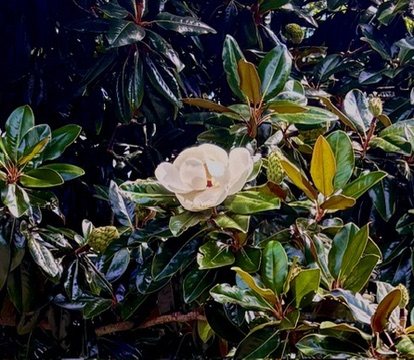
The View

The porch at our house affords a view across plains that stretch far out into the horizon as they move expansively away from the mountains behind us. We’ve been enjoying the view from this porch for years now, especially so over summer months as they have always sported a reliable weather pattern. That pattern goes something like this…

Bright blue, crisp mornings beckon you to the great outdoors and mount to a toasty crescendo of sunlight. A teatime clap of thunder rings out signalling hikers to get off the mountain tops, golfers to come in and parents to get their children out of the pools. This is followed by a lovely shower that, for variety’s sake occasionally includes a brief pea sized hail storm. The end of showers is more often than not signalled by a rainbow and you’re back to blue just in time for all the hues of sunset to dance across the sky. On a dozen nights or so over the course of summer, there are electrical storms off in the distance maybe five at a time, dotting the horizon. We can take them in from the comfort of our porch and marvel at their far away power. In the certainty of these rituals afforded by Mother Nature, the community at large plans garden parties, barbeques, lawn concerts, outdoor weddings under starry night skies…and oh how the dogs and me too, howl on magical full moon nights. Until now.

We’ve been being warned for years that it could come, could meaning would but atleast in my mind it seemed hypothetical as long as we were, I don’t know…recycling? Being more conscious about using big anything and switching, however slowly, as a society to electric cars and renewable energy sources. I think I first noticed things start to shift when I got to sail again in the waters of British Columbia after an earlier foray some five years prior. Glaciers that had previously come right the way down to the water’s edge were now noticeably retreating. At first, I thought I was mistaken…but this pattern of retreat repeated itself in too many inlets to be denied. Six years ago now I think it was the western skies where I live opened up and for four minutes dropped hail stones the size of softballs.  Animals at the zoo were killed, over 30k cars were destroyed, countless roofs, including my own were decimated. Miraculously, no one was killed.  Two years later it happened again. You get the idea.

This summer, we returned after a time away ready to enjoy the season ahead and the traditional dance with nature. At first the differences of what we were experiencing were fun. Towering cumulous clouds more associated with tropical climates, mushroomed out of low, giant slate misty grey slabs and dominated the traditional blue dome for days at a time. Rain pelted for hours at a stretch for nearly a week. People started making jokes about being in Seattle. Never before seen plants started coming up out of the ground. Perhaps they’d been lying dormant all this while just waiting for life giving waters? I turned the heat on in July. What used to be distant thunder storms are now quite often happening right above us in great claps and enormous striking bolts that run fearsomely into the ground or in a mile’s long and nearby jagged streak across the sky parallel to the ground. As these unusual patterns have begun to be the norm that sense of fun has been replaced with something unsettling.  Things are not normal. Normal is gone.

As I write, reports continue to flow in of the devastation in Lahaina.  Southern California awaits its first ever tropical hurricane.

My son was five when the Twin Towers came down. That horrible morning when all our worlds changed, he asked me in effect what physical structure could we rely on if we could not rely on something as solid as a tall building? I told him we could always rely on nature.  That he could go, as we often did during his childhood, out on a hike find a favourite tree or boulder and just soak up its calm and majesty. That that was reliable.  What do we tell our children now? That we blew it? That we did not heed the decades of warnings?

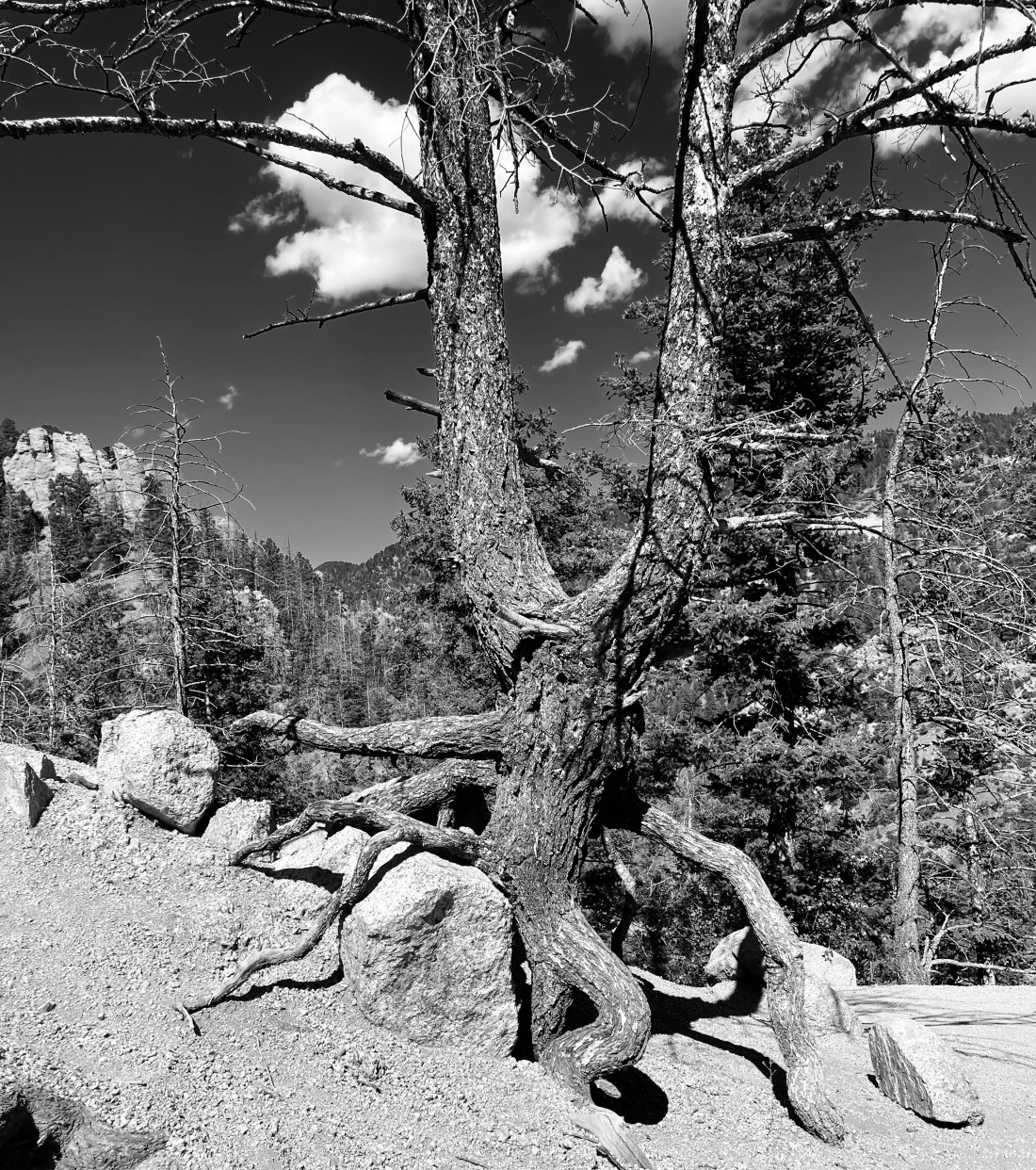
There are some trails I like to hike in the mountains. This year with some shock I noticed that the roots of several pine trees on the trails have been exposed not by the usual inches but rather by several feet.  Also, surprisingly I came one day to a massive boulder smack in the middle of a trail, a boulder that had not been there a few days earlier.  My first thought was that the obstruction had made the path impassable.  On closer look, I realized you could just get around it without falling off the mountain, and so I did. In other words Mother Nature for all our folly is still saying to us…roots can be exposed but you can still stand.  Boulders come in life but there is, usually, a way around them, no matter how narrow the path.  So… a grace note but the bellwether is ringing loud and clear.

The Boat

A trawler docked next to ours one early morning…same length at 90 feet but that is where the similarities ended. Plenty of elbow grease went into ours, that would be our own elbow grease, theirs on the other hand, had an extensive crew who, when they were not hosting a fiesta, saw to rigorous routines of serious buffing and polishing and that was only what we could see from the outside. We were ofcourse longing to see what was going on on the inside.  We’d been told by the Dock Master that the elegant vessel was owned by a well to do German divorcee and was conducting a world tour tracing each continent whilst doing research on sharks. Ok now we were even more curious to get on board…but how? As luck would have it, I was coming down our gang plank one afternoon just as Madame boat owner was coming down hers.  She was in clear discomfort as she hobbled with the aid of two crew members. We greeted each other and she explained that she had broken her toe and was going to trek into town to see a local doctor…which in this particular country could be something of an adventure. My beau, who owned our boat, was a doctor and willingly offered assistance seeing handily to her aching toe.  She was profusely grateful and issued us an invitation to dinner that night on her vessel. We accepted in a heartbeat with unabashed and overly enthusiastic teenage glee. 

At the appointed hour we asked permission to come aboard.  Her ship did not disappoint. The hot and cold running crew was a far cry from the scruffy two of us, an occasional three, manning ours. Enroute to the dining room we were escorted through their research command center which sported every known gadget to seek and study the lions of the seas. Her expedition guests were an awesome gathering of scholars, scientists and artists alike. Conversation sparkled. Chef attended the first course, describing the delectables we were about to ingest. The finest of wines complemented each course. After the main course had been cleared, the crew lined up smartly to introduce themselves; stateroom maids, engineers, right the way up to the Captain. Our hostess nodded approvingly and segued neatly over desert into the upcoming weeks’ running order of the day.  They would set sail predawn to a given destination known for sharks. All guests would be invited for a dive, followed by a buffet luncheon and a second optional dive in the afternoon. Cocktails would be served at 7 PM followed by a lecture in rotation, given by each of the guests. The lecture would be followed by a dinner and no doubt robust conversations of the day’s findings and the lecturer’s revelations. It was heady…and yet the inklings of something that had begun to surface over the course of dinner started to shift the sands.  Something was amiss. 

Prompted by questions from my beau we had learned that our hostess’ father had been an art collector. That’s interesting, judging by her age, his young adulthood would have been right in the shank of World War II. We learned too that she had married into the Von Habsburg family, well known for many things, among them art collecting.  Shift. 

When questioned we learned that our hostess’ interest in the art world had been inspired by her father who had gathered his collection in Germany during the war and had initially been focused on landscapes she said with a gentle smile. Shift again. Even more suspicious, just after the war he had sold his apparently vast collection and with those monies had begun collecting works that were more to his liking. Vibrant artworks of the up-and-coming. Brock, Picasso. You know, the new kids. In the awful dawning of more than likely what had afforded this caviar and champagne atmosphere, we lost the thread of conversation.  This was poisoned food bought with ill begot gains. Every liquid on the table had become blood. Every tangible made of crushed body parts. I wanted to vomit. 

Of course what her father had done with the gains of selling his first “collection” after the war had been legal. There could be no recourse at this point except a moral, karmic one. But the initial collection? What Arian German male of means during the war was not collecting art that had not been stolen from the Jews? Eyes locked in tacit recognition. We excused ourselves and disembarked from the once enviable boat as quickly as we could. 

Just as their itinerary had promised, they were gone before we awoke. In the morning their slip stood empty, gone. Gone just as so much, was gone in World War II. It seemed appropriate, very, that the mission was to study sharks. Study her past. Study herself. Will that meal ever be digested? Eight years ago now…not yet. I do not think it will be. Ever.

Dewey and the Town That Kindness Built

During the post WWII occupation days in Japan, General MacArthur called on the skills of many brilliant young men and women to help build what successfully became modern Japan. Some would argue, too successfully.  My parents were part of that effort…Dad as a chemical/mechanical and civil engineer travelled the length and breadth of Japan for purposes of turning munitions factories back into fertilizer plants. Mother, along with another American woman, opened a school in Tokyo called Western Customs and Manners, and taught many curious Japanese women how to walk in high heels, use a knife and fork, understand something of how an American woman operates. From the stories I heard over the decades from my parents and foreign friends of theirs who were also in Japan at that time, it was clear that great pains were taken by them, through learning the language, reading the literature, looking at art work, etc., to gain an understanding of the Japanese. It was from the well spring of that knowledge-based respect that cross cultural bridges were built and as a result, all boats rose in the tide. The ethos of that post war effort stands in stark contrast, for instance, to how Americans dealt with Iraq after the war there. One got it right, the other did not. 

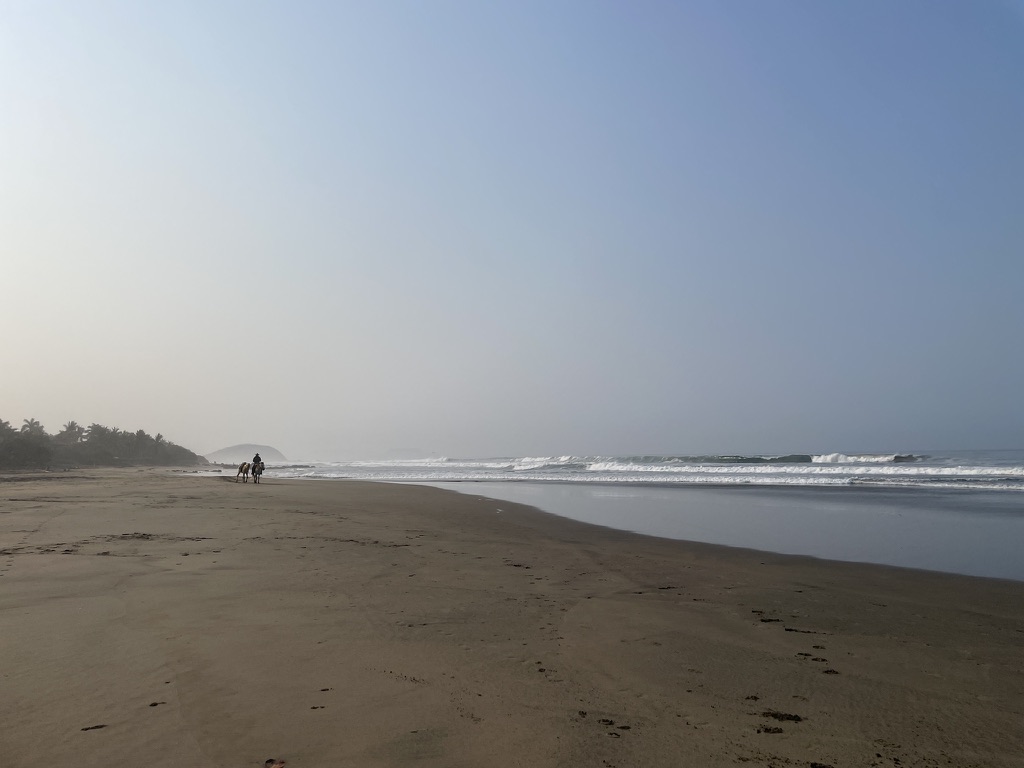
Of late, I’ve been reminded of that moment in time I’d learned of over my childhood, coming to know a remarkable fellow named Dewey.  If I have it right, he was from the Pacific NW and had worked from there up into Alaska for years as fisherman turn businessman, braving the elements until one day he set sail for points south in order to find a spot that offered alternatives to the cold and the gray. Thus, he came to a tiny, subsistence level living, fishing village on the Pacific coast of Mexico who’s bay and nearby mountain range afforded shelter from storms. The pueblo’s long flat beaches spoke to him of a possibility of controlled tourism and few restaurants spoke to an untapped, welcoming spirit.  By the time I met Dewey, he had been living in the village for some 30 years and the miracle of what that little village has become is in no small part due to his efforts. To hear him tell it, soon after finding the village he set up a modest bar on the beach, learned the language and began to observe, catch the vibe, began conversing with the local elders, he learned and obeyed their customs and respected their priorities. He also handpicked some pals to come down. If Dewey didn’t like you, you weren’t invited. If you saw a piece of beach property and started talking about building a mega mansion…somehow it just was never possible to build one. He learned about Mexican property ownership laws. If what he needed didn’t exist, he with the help of a new coterie of smart Mexican associates, would create necessary regulations in order to protect everyone involved. He found ace accountants, architects, builders and gradually, carefully introduced them to the village. All the while though he was doing something even more important. Here’s an example of what that something was all about and why I am so in awe of this person.  

Dewey and his partner at the time, Bobby, made friends with a local family.  One of their young daughters had, before Dewey came along, met with a terrible accident and was paralyzed.  In the fullness of time Dewey learned of this most unfortunate circumstance and stepped in. He brought a wheelchair in from out of town. He had a ramp built into her house and various other adjustments made so as to make this young woman’s life manageable. He saw a need, opened the floodgates of his heart and made someone else’s life better. He did not muscle his way into town…he nurtured its evolution through kindness, serial kindnesses. He did not mow down what was here…he learned it, respected it, sublimated his own way of doing things to create a symbiotic system that works.  

I have a girlfriend in her late 40’s who grew up here, in this village.  Speaking of her childhood she explained that potable water was accessed by walking the one mile up the hill.  People died of dysentery on a regular basis. School only went to 6th grade, most inhabitants were illiterate, there was no electricity and people labored hard to live off the land. She now speaks fluent English as does her husband and their children, runs a business, drives a car, her son will soon graduate and begin his career as a dentist, her teenage daughter is one test away from becoming a black belt. All that change in one lifetime….and she too points to Dewey as being responsible for having ushered in most of the change. 

Today, there are multiple family run restaurants, a dedicated recycling effort, stray dogs are seen to, all village students who want them have laptops, there is a school bus, organic gardens thrive. Astonishingly there are houses built all up and down the beaches but not so as you would know it. None of them are taller than the palm trees, all of them draw their design and materials from the area. Lives of many of the locals and foreign residents are deeply intertwined to the point of being chosen family. People smile here. So do the dogs. There is no crime. 

To go down the main street with Dewey is an experience. As the unofficial Mayor, he is friend to everyone. I think there is no one here he does not know. A wave, a conversation about a relative who is feeling better, a joke…laughter, always laughter…that is part of his considerable currency. He’s got a two way bullshit meter…he doesn’t BS folks and folks don’t BS him.  That’s useful kind of meter to have anywhere. I’d like one. 

This is the town that kindness built.  It can be done. It works. It’s working. 

BHOPAL

This is a hard one to tell. My father, gone now nine years, was an executive with Union Carbide.  He was an engineer by trade and moved the family to Tokyo, where I was raised, in 1959 in order to design and build the Carbide plant there, their first in Asia. That became the prototype for the Carbide plant in Virginia and later, in Bhopal.  At some point in I think the mid 60’s, he became aware of a flaw in the design of the plant…a vulnerability that could be triggered by human error. He waged a mighty battle with the NY Carbide headquarters powers that be, to set it right. They were uninterested. Too costly. Fortunately, by enlisting the considerable assistance of Carbide’s Japanese corporate partners and Japan’s government, he/they prevailed. The correction was funded by NY and completed. (He was permitted to stay on with Carbide in Tokyo for the remaining years of his career but, as making those kinds of stands can do, it cost him considerably in his career. NY never fired him, but they did bring in an American boss above him. Humiliating but at least in Tokyo office, folks knew why Dad had in effect been so severely demoted.)

Much of the following I only know through the lens of my childhood so great chunks of what actually went on, not to mention all engineering facts, are not known to me. Here is what I do know… 

When a version of Dad’s design was to be built in Virginia he pleaded with the Carbide board to amend the flaw. They did not. In what year I do not recall..70’s perhaps?…because of that flaw, that plant had an incident in which near catastrophe was somehow averted. To my knowledge the flaw remained in place. Mid to late 70’s, Dad retired.

I remember him being distraught when the disaster in Bhopal happened. “I warned them, I told them”, kind of dinner table thrashings. Whilst he had not been directly involved in Carbide’s expansion into India, my sister and I did witness him feel a terrible weight of responsibility and powerlessness against corporate will. 

The unthinkable happened, the trial, the facts/the flaw exposed for good and all, the collapse of Carbide, the settlement paid to the Indian government. I learned recently from a high placed diplomat who had served in India for many years, that a sliver of that payment went to the victims. Tragedy upon tragedy.

Dad lived to 100 and I got to be his caregiver for his end of days.  Forgive me…this is intimate. As his time approached he would toss and turn during the night, on and off with hallucinations.  Hospice counseled me that this was not uncommon amongst the dying. Labor pains of death, I suppose.  I slept in the room with him his last few weeks and on occasion he would utter worried protestations like… “They’re coming to get me.”, “No!” I would quiet him down as best I could through the night. He was a good man…I could not fathom who these “people” might be…nor could I understand why he, in his aged frailty, was hanging on. Clearly he was wrestling with something…and in hindsight now I think he held on in order to work through his soul’s burden. 

Two, maybe three nights before he died he hollered…and where that strength came from I do not know…the words, “I told you I was sorry. What more do you want me to say?” I assumed he was talking to my dead Mother, making some sort of private amends for emotional injuries that can happen in any long and good marriage. 

Again he hung on and continued to be restless. The night before he died, he was particularly active in his bed…I was half awake when at 1:40 am, a man who could no longer move, sat bolt upright and in full voice bellowed the words, “Bhopal! Bhopal! Bhopal!” Then he lay back down and went soundly to sleep for the first time in weeks. With long deep breaths, not the short pants he had been pulling in for days, his body was utterly relaxed and so remained until he drew his last breath 14 or so hours later.

Guilt is not always a rational demon. We know he had done everything humanly possible to sound the alarms. If this indeed was guilt, it was irrational. He was, however a deeply compassionate man and so as is the lot of those types, he too felt for his fellow man’s sufferings with little defense to the barbs.

I’d never before nor since witnessed a wrestling of the conscience, of the soul but feel I did in my Dad’s moments. If crie de coeurs have power then that too is what I saw transform his physical being. I believe he rests in peace. May it be so for all the victims of that terrible day in India.

A Memory

I was new to LA. It overwhelmed. My anchor was NY pal Donny Most who had himself recently transplanted to the west coast and he helped my girlfriend Shelley Spurlock and I negotiate where to get a flat, where to buy a Thomas guide, where to buy a car…he was our life line. The trend continued when Donny kindly introduced me to Happy Days casting director Bobby Hoffman, a friend to all actors, as there was an upcoming role on the show he thought I could be right for. Bobby made the nerve wracking process of auditioning feel like a party to which everyone was welcomed and lucky for me, I was cast as Ron Howard’s girlfriend, Gloria.  

There was a spark in the air on that set…largely ignited by bigger than life director, Jerry Paris. He set the tone, was the tone on the set. Earth weights were dropped, fun and focus prevailed. The infectious sense of anything being possible that had for the most part pervaded the 50’s in the US fueled the can do spirit of the entire Happy Days company. Cast mates became friends and those ties all these decades later, have remained strong. 

The other genius was the visionary, Garry Marshall. He could see around corners, seemed to view life through an inner drone shot always working to serve the big picture. He created the perfect writing team…a remarkable balance of joke meisters, character wizards, master story tellers and craftsmen. He cared for the soul of the set both collectively and individually. Everything mattered, nothing was precious. He led from behind supporting everyone to do their best work. I’ll pause here to say that years later, Garry’s memorial in LA was packed to the gills with hundreds of mourners. Tributes, tears and laughter rolled on gloriously for four hours and still there was so much more to have been said. In the after party testimonials of how Garry had moved their lives, indeed my own as well, forward, flowed freely. He flung doors of opportunity open and upgraded the life trajectory of all in attendance. Gratitude ruled that sad day. I hope Garry felt it.

When Ron left the show, supporting characters around Ritchie did too and so that was me out of a job. Darn. Years later a casting notice was sent out for a fiancée for Fonzie, described literally as a “Linda Purl type.”  My agents got me in to audition and I was twice lucky. By now, the show had long morphed out of film to three camera, Donny and Anson had both decided to leave the show after long good runs to pursue new successes, but Henry, Marion and Tom remained as did the irreplaceable Jerry Paris. Darling six year old, Heather O’Rourke was cast as my beautiful little daughter and we set about, on the wings of the brilliant writers, to make the story line Garry had envisioned work.

I remember coming up to a Christmas episode in which Santa Claus figured heavily, Jerry and Garry in particular were concerned about (spoiler alert) Heather catching onto the fact that Mr. Claus might be more spirit than actual.  Many conversations ensued about how to guard our young actress’ innocence but no solutions were to be found. Kathy, Heather’s mom ultimately observed that whilst she appreciated everyone’s concern this too early realization would just have to be the cost of her daughter being in the biz.

The now dreaded day was upon us. We all held our breath as the jolly actor in the role made his entrance to the set in his red suit. Heather stopped in her tracks at the vision and after a very long, heart stopping silence turned to Henry and said “Well, Santa Claus can’t be everywhere at once so he needs to have his helpers.” Henry, without skipping a beat, whole heartedly agreed and a greatly relieved company carried on with the day’s work. The point is that people, those people cared.

A word about Henry. By the time I came back as the character of Ashley Pfister, the show and he had risen to meteoric heights…the kind that can be soul bending. Too often it can be human nature to let those kinds of extraordinary, long term successes warp the ego, lead one to take the privilege of working for granted or worse, make someone lazy or not care. To his great credit Henry did not take that lesser road. Every day on set was his first, he worked hard and that encouraged everyone to do the same. He was and remains grateful to every fan of the show and of the Fonz. For that and honestly for every moment I got to share with the Happy Days family I remain ever grateful.